


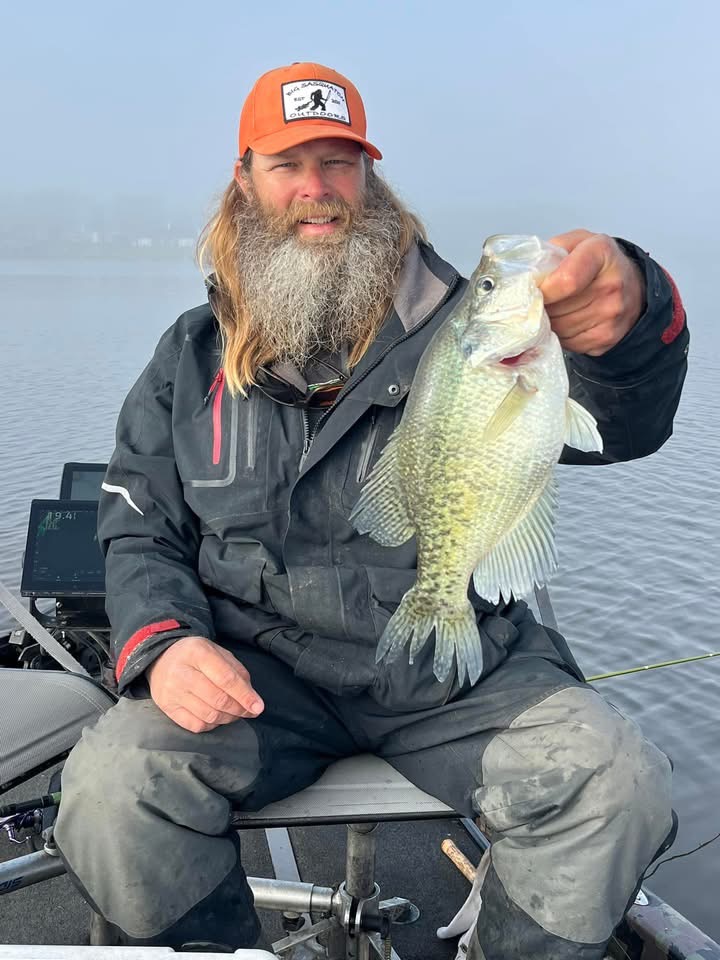
Featured photo: Crappie guide Wesley Miller catches his fish by locating the thermocline and fishing just above it.(Courtesy Photo)
One of my regular contacts I use to get current fishing reports is crappie guide, Wesley Miller. On my visit with him last week, he mentioned something that whetted my interest. He told me that this time of year, he keeps his eye on his electronics to locate a thin line that shows up and he fishes along this line or just above it to locate crappie.
Kade Hillestad is a young and very successful bass angler who told me basically the same thing when locating bass when the weather is warm to hot.

Both Miller and Hillestad mentioned the word “thermocline”, which created enough curiosity for me to learn more about what why this magic line is so important to catch fish in summer in reservoirs with sufficient depth to make the thermocline an important issue.
Exactly, what is the thermocline? I looked it up on-line. The definition is “a middle transition layer in a large body of water where water temperatures change rapidly in depth, separating warm oxygen-rich surface water with water where temperatures fall and oxygen is greatly reduced.”
I always thought that in summer, you needed to fish deeper because water more shallow would be too uncomfortable for fish to live. Not so, says Miller and Hillestad.
“It all depends on the depth of the thermocline,” said Miller. “Fish have to eat all year long and this time of year, where they find the minnows and small fry from hatches will usually be in shallow water because that’s where they’re most comfortable.
“On lakes deep enough to have a thermocline, Lake Claiborne for example, locate the line on your electronics. The line can move deeper or more shallow during the course of a dayand the key is to stay above it because below that line, oxygen is absent and where there is no oxygen, you won’t find fish,” he added.
Hillestad said basically the same thing when targeting bass. He caught his impressive stringer of bass using the Prickly Pear, one of the new bass lures that looks nothing like something a fish would want to eat.
“I was targeting the thermocline during this tournament where we fished all day and all night,” said Hillestad. “By keeping up with it on my electronics, I noted that the depth of the thermocline varied from deep to more shallow especially during the day as water temperatures warmed up.
“My goal was to keep my lure at or just above the thermocline where I caught all my fish. It is pointless to fish below that line because the water is colder with little or no oxygen, and where this is absent, you won’t find fish,” he said.
Some of the comments I read about the thermocline is that the top layer of water above that line is known as the “sweet spot” offering a mixture of water with dissolved oxygen whereas the area below that line is cold and stagnant with decaying organic matter on the bottom, which uses up all the oxygen and creating a dead zone. Fish and bait fish avoid this area.
Another bit of information suggests looking for areas where the thermocline intersects with structure, such as falling trees or stumps. These areas are more likely to hold fish, not only because of oxygen but also this is where bait fish are more likely to be hanging out.
Next time you head for the lake, locate the thermocline to improve your chances at bringing home a fine mess of fish.