



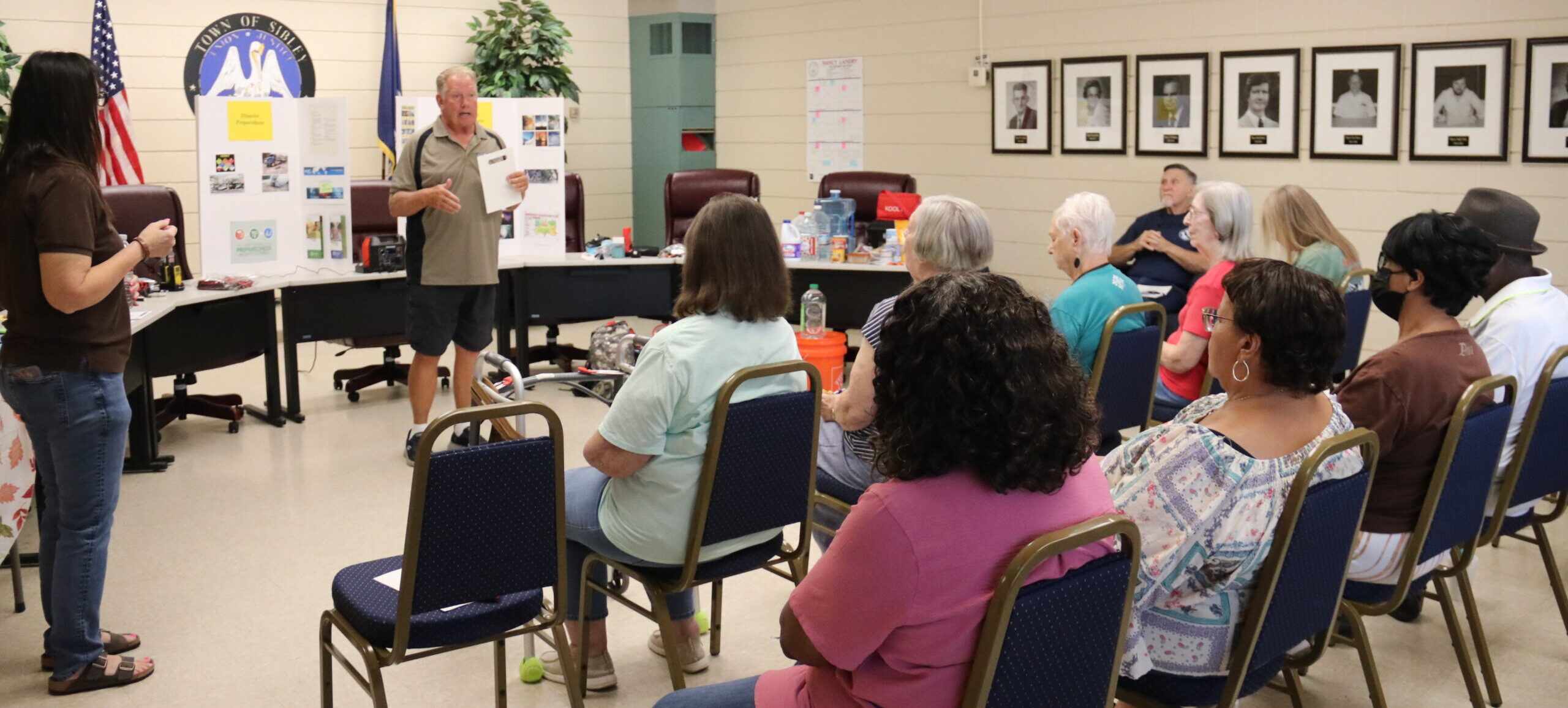
Residents learned how to prepare their households to remain self-sufficient during the critical first 72 hours following a disaster during an emergency preparedness seminar Thursday, September 24, at Sibley Town Hall.
Brian Wilkinson presented the program, which focused on preparing for both natural and manmade disasters so individuals, families, and communities can recover more quickly. In Sibley, likely natural hazards include severe thunderstorms and tornadoes, while a train derailment is among the potential manmade emergencies residents could face.
Wilkinson emphasized that emergency preparedness should begin with a plan rather than a shopping trip. Families should determine what they need, what they want, and what additional items would be useful, then prepare enough supplies for everyone in the household — including pets — to last at least 72 hours.

Residents should also determine in advance whether they would evacuate or shelter in place under different circumstances. Wilkinson recommended preparing a “go bag” for each household member that can be grabbed quickly if evacuation becomes necessary.
For those sheltering at home, families should identify a safe location to use during tornadoes and severe storms. Emergency supplies can also be stored in or near that area.
Preparation should account for the possibility of losing electricity, water, cell service, and other utilities. Wilkinson recommended having multiple ways to receive emergency information and communicate with family members and neighbors.
For households without generators, backup power banks can provide enough electricity to recharge phones or operate small devices such as fans. Solar phone chargers, handheld radios, and emergency weather radios can also be useful if normal communication systems are disrupted.
Other basic supplies include matches, candles, flashlights, work gloves, a wrench, and a manual can opener.
“You can never have too many flashlights,” Wilkinson said.
Safety precautions are also important when utilities are disrupted. Wilkinson said anyone who smells the rotten-egg odor associated with natural gas should evacuate immediately and report it. Residents using home generators should ensure the main electrical disconnect is off before operating the generator to prevent electricity from feeding back into power lines and endangering utility workers.
Medical supplies should also be part of an emergency kit. While a basic first-aid kit is useful, Wilkinson recommended preparing for more serious injuries with items such as bandages, tape, a tourniquet, splints, plastic wrap, and sanitizer.
He also noted that a charged cellphone can call 911 even without an active paid cellular service plan, provided it can connect to an available cellular network.
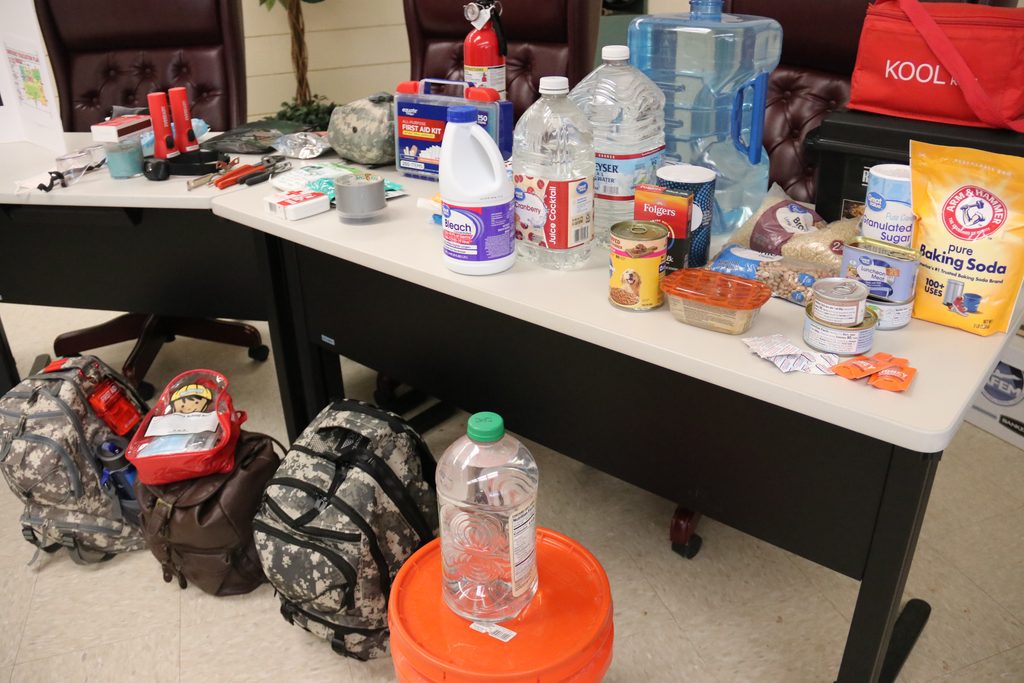
Food and water make up another major part of a 72-hour emergency supply. Wilkinson recommended canned and dried foods because of their long shelf lives, with an emphasis on protein sources such as canned meats, jerky, and peanut butter. Staples such as sugar, salt, baking soda, and honey can also be stored for extended periods. Families should remember prescription medications and food and other necessities for pets.
Wilkinson suggested keeping several 3- or 5-gallon containers of water around the home so water is available during an outage. Stored water and collected rainwater should be disinfected when necessary, and portable water filters can provide another option.
He said unscented household bleach may be used to disinfect clear water in an emergency, using eight drops per gallon and allowing it to stand for at least 30 minutes before drinking.¹
A 5-gallon bucket fitted with plastic liners can also serve as an emergency toilet if water and sewer service are unavailable.
Communication should be included in a family disaster plan as well. Wilkinson recommended choosing a relative or other trusted person outside the state to serve as a central contact during a major disaster. Family members who are separated can report their status to that person, allowing others to obtain information even when direct communication within the affected area is difficult.
Wilkinson stressed that emergency kits will differ from household to household. Age, medical needs, pets, and individual circumstances all affect what should be included.
The common goal, however, is the same: prepare in advance to be self-sufficient for at least the first 72 hours after an emergency.
¹Editor’s note: Federal emergency guidance specifies regular, unscented household chlorine bleach and varies by bleach concentration and water clarity; residents should follow current government instructions rather than relying on a single ratio for all bleach products.