


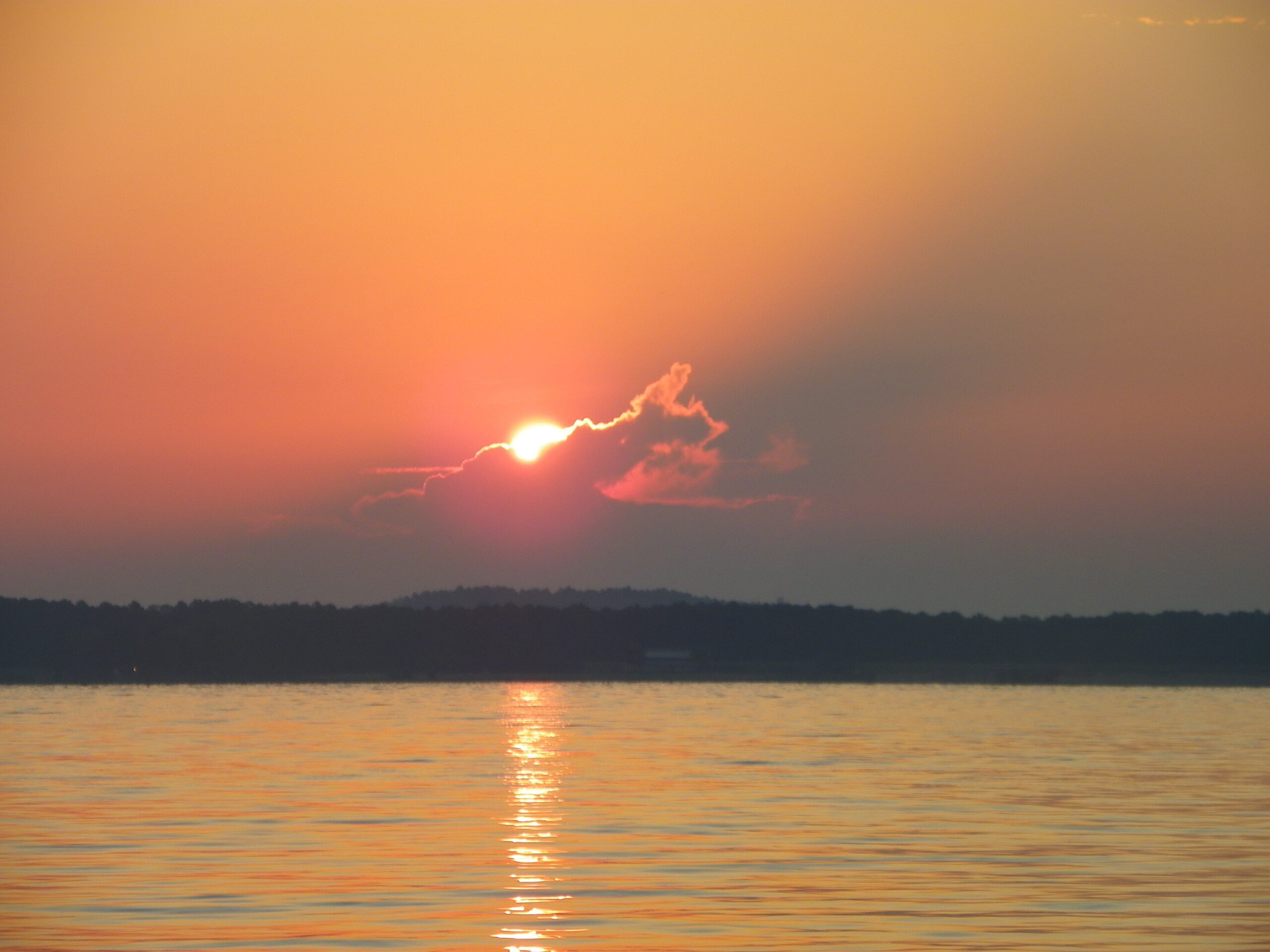
Featured photo: Lake Claiborne is a lake that features a “turn over” each year. (Glynn Harris)
In last week’s column, we talked about that “sweet spot” on our lakes, the thermocline. To refresh, the thermocline separates the warmer oxygen-rich layer of water separated from colder oxygen-deleted water below the thermocline.
There is another feature on lakes in later summer that upsets the balance of the water above the thermocline and that below this line. It’s called “stratification” or as we know it best, when a lake turns over.

I had to do some research to find out just what this phenomenon is, how it works, when it happens and the effect on the lake and its fishery.
As autumn air temperatures decrease, the surface water of the lake begins to cool, causing the density of the water to increase. This denser, cooled water starts to sink, displacing the slightly warmer, less dense water below. This continuous sinking and displacement gradually deepens the thermocline, pushing it deeper and weakening the stratification barrier.
As the surface water warms, it begins to sink until the entire water column reaches a uniform temperature. Wind and currents work together to mix the lake completely.
When it mixes completely, the oxygen-rich surface layer israpidly moved down, replenishing the oxygen supply for deep water organisms. Simultaneously, the nutrient rich water that had accumulated at the bottom is brought to the surface. This bottom water typically contains high concentrations of nutrients, such as phosphorus and nitrogen, which are released from the sediments in low-oxygen conditions.
This sudden upwelling of nutrients to the sunlit surface layer can fuel rapid growth of plankton and algae.
How can the average observer note that the water has turned over? There will be a noticeable change in water colorand odor; you can actually smell an unpleasant odor from all the stinky stuff that had been on the bottom layer such as the release of dissolved gases like hydrogen sulfide and methane that is now on the surface. You’ll also notice more algae blooms.
Surface water takes on a turbid appearance, not clear or transparent because of the stirred-up sediment and mud creating a temporary unpleasant odor.
Anglers often stay off the lake when a turnover occurs because of the stinky off-colored water. The fish may not be in the same areas they were before this happens because water temperatures and oxygen won’t be confined to the top layer now that the oxygen depleted lower area had mixed with the top. They could be anywhere, shallow to deep when this occurs. This makes fish concentrations harder to predict and can be a problem as you have to search harder to find fish which are more likely to be scattered rather than being concentrated together in one particular spot.
We are reminded that a lake is not simply a single body of water. It is a living, layered system always changing with the seasons.
I find this most interesting when we realize that our favorite lake has a mind of its on and can do some interesting things, especially when it turns over.