



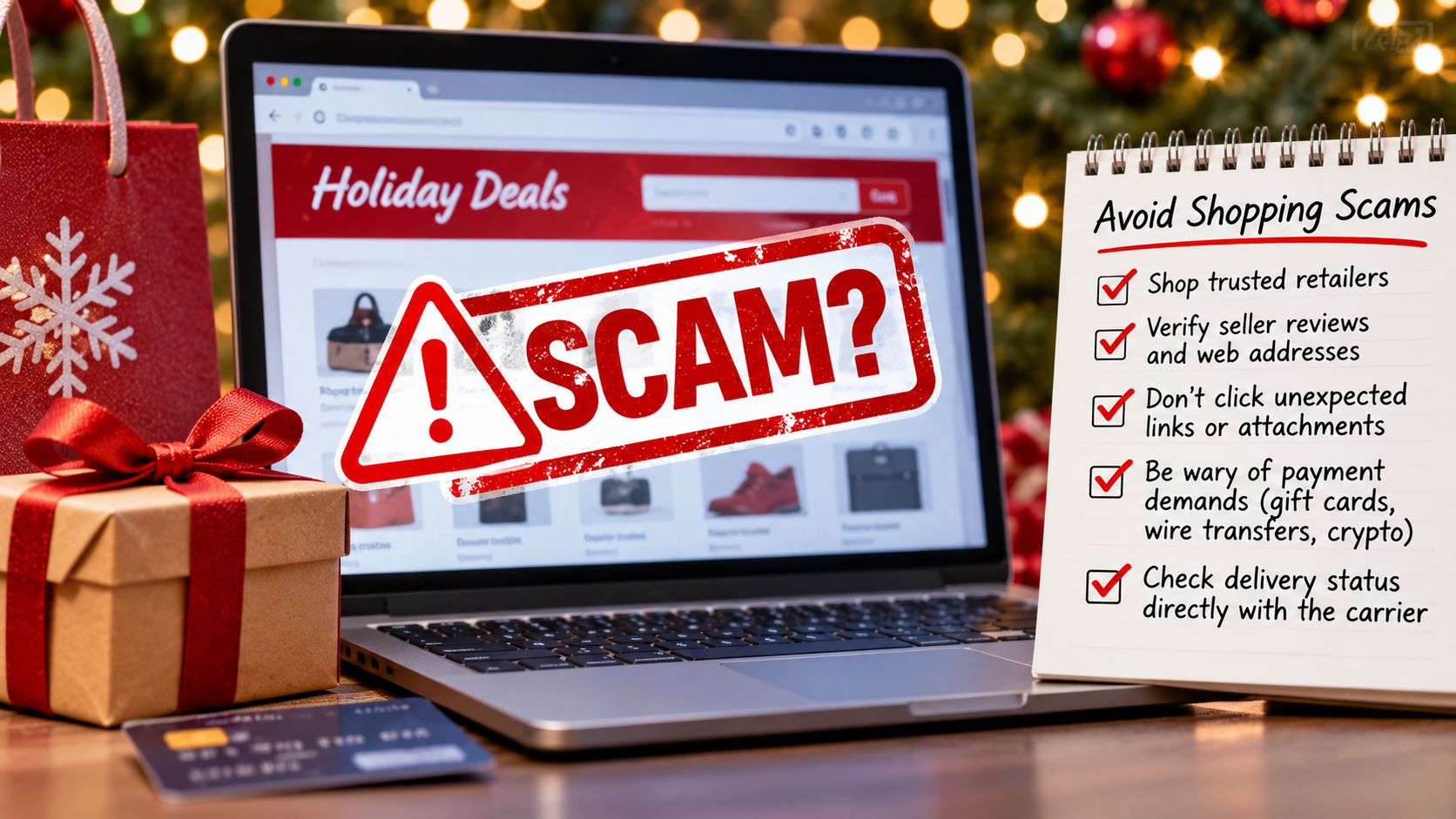
With Black Friday and Cyber Monday approaching, federal authorities are reminding consumers to remain vigilant against scams as they shop for holiday gifts, make charitable donations, and arrange holiday travel.
The IRS Criminal Investigation (IRS-CI) Atlanta Field Office issued a warning during International Fraud Awareness Week, November 15–21, highlighting several common schemes criminals use to steal money and personal information during the holiday season.
“Recognizing the warning signs of financial fraud can prevent people from becoming victims,” said Acting Special Agent in Charge Maisha Horton, IRS Criminal Investigation Atlanta Field Office. “International Fraud Awareness Week gives us an important opportunity to share those signs and help the public protect their money and personal information.”

Shoppers should be particularly cautious when encountering unusually deep discounts, unfamiliar online retailers, and advertisements on social media. Criminals may create fraudulent websites that closely resemble those of legitimate businesses, offering merchandise that never arrives or collecting customers’ payment information for unauthorized use.
According to the FBI’s 2025 Internet Crime Complaint Center (IC3) Annual Report, reported losses from non-payment and non-delivery fraud totaled $504.4 million nationwide.
IRS-CI identified several common scams consumers should watch for this holiday season:
- Online shopping scams: Fraudulent websites, advertisements, and marketplace sellers offer steep discounts or nonexistent merchandise. Consumers should verify website addresses, research unfamiliar sellers, and use secure payment methods.
- Phishing and impersonation: Criminals may pose as retailers, banks, delivery companies, government agencies, or even family members. Avoid clicking unexpected links or opening attachments, and independently verify requests for money or personal information.
- Delivery and mail scams: Fraudulent text messages and emails may claim a package cannot be delivered without additional payment or personal information. Check delivery status directly through the carrier’s official website or app. Collect mail and packages promptly.
- Payment and account fraud: Scammers may use fake refunds, stolen passwords, and payment apps to gain access to accounts. Be suspicious of anyone demanding payment through gift cards, wire transfers, or cryptocurrency.
- Charity scams: Criminals take advantage of holiday generosity by creating fraudulent charities and fundraising campaigns. Research organizations independently before donating.
- Travel scams: Fake vacation rentals, discounted airfare, and fraudulent reservation services can leave travelers without accommodations or transportation. Use established booking platforms and independently confirm reservation details.
- Identity theft: Fraudulent websites and messages may collect sensitive personal and financial information. Use strong, unique passwords, enable multifactor authentication, and regularly monitor financial accounts.
Consumers shopping online should consider using credit cards rather than debit cards, as credit cards generally offer greater protections when disputing fraudulent purchases. Shoppers should also retain receipts and order confirmations and regularly review their account statements for unauthorized charges.
Anyone who believes they have fallen victim to a scam should immediately contact their bank or credit card company, secure any compromised accounts, and retain copies of correspondence and transaction records.
Suspected fraud can be reported to the Federal Trade Commission at ReportFraud.ftc.gov or the FBI’s Internet Crime Complaint Center at IC3.gov. Resources for victims of identity theft are available at IdentityTheft.gov.
Suspected tax and financial crimes may also be reported at IRS.gov or by contacting the IRS-CI Atlanta Field Office at [email protected].