

By Taylor Pippin and Camille Milligan | LSU Manship School News Service
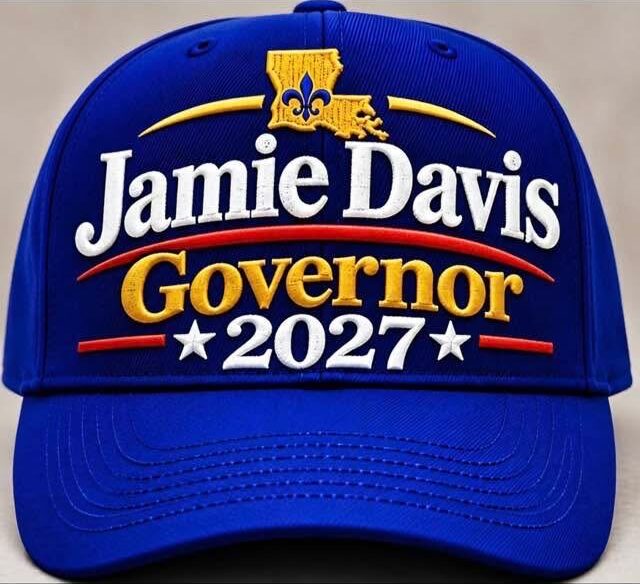
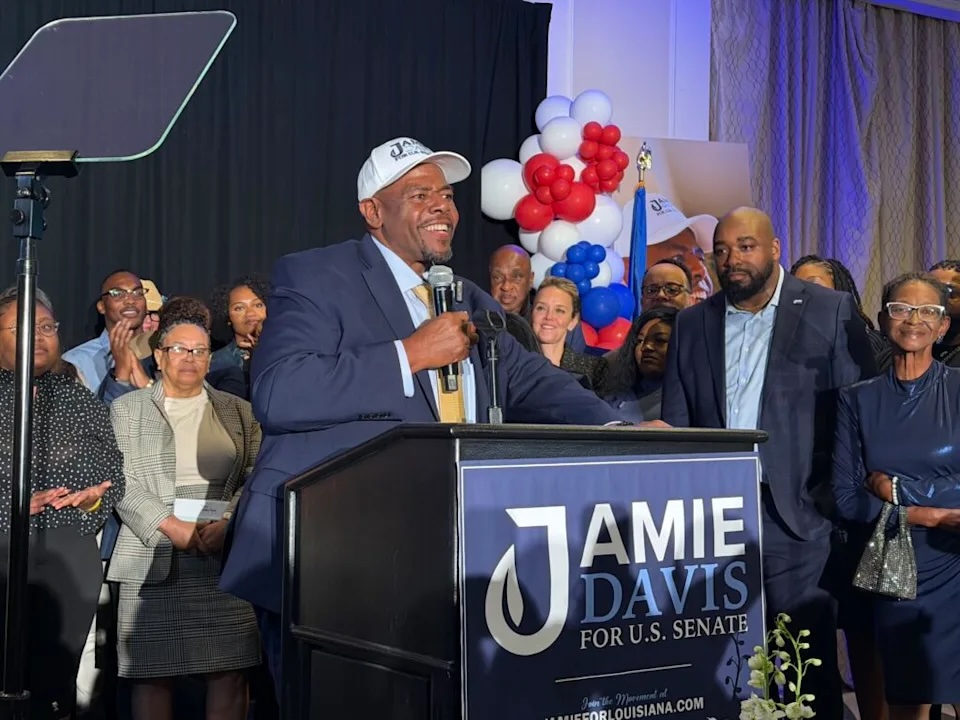
After a campaign that came within a whisker of an historic victory, Jamie Davis said if he does not run for Louisiana Governor next year, he will run for U.S. Senate again in 2028, and he will stay active in Louisiana politics.
“I will be involved in the governor’s race, one way or the other; whether I am the candidate or whether I’m not, I’m supporting whomever the candidate is,” Davis said. “I will make this promise, though: If I don’t run for governor, most definitely running for Senate in 2028.”

In an interview with the LSU Manship School News Service, Davis said his campaign proved that a Black candidate and Democrat could succeed in Louisiana. Through his grassroots, door-to-door efforts, Davis demonstrated his ability to drum up widespread Democratic support and pull voters to the polls.
“You know, people said that a Democrat could not win statewide anymore, and they also said that a Black candidate couldn’t do it,” Davis said. “So, I think we proved that whole philosophy to be totally wrong. I don’t think there’s nobody that will make that statement again.”
Davis came so close to breaking thorough in the Nov. 3 election that saw Democrats take control of both the U.S. House and the Senate amid voter complaints that Republicans were not focusing on their concerns.
The two issues Davis heard most from voters were concerns about affordability and government corruption.
He said that even though some people were showing up to cast votes on specific issues, it took the right candidate to inspire them to vote. He wants people to be more engaged in their political communities, and he encourages everyone to find and vote for the candidates that best align with their values.
He took issue with the view that his strong 49% turnout merely reflected disapproval of President Donald Trump, the war in Iran, tariffs and inflation.
“Somebody had to inspire these people to go vote,” Davis said. “Somebody had to go knock on doors and say, ‘You have to go vote.’”
Davis stressed that he did not use any money from political action committees or super-PACs to finance his campaign. He said nearly all his financial contributions came from individual donors.
He also did not receive financial resources from Democratic National Committee or other national groups that donated to candidates in other Southern states like Mississippi and Florida.
“They gave Scott Colon $3 million,” in a Mississippi Senate campaign, Davis said. “They gave Angie Nixon $3 million” for her close but unsuccessful Senate bid in Florida. “Those were two of the lowest totals that came from the DNC. If they give me $3 million, we probably would blow this election out of the race.”
Davis calculates that he needed seven more votes in each of the state’s 3,722 precincts to win. With more funding, Davis said he would have spent more on TV ads, expanded campaigning on the streets and provided free rides to the polls for voters without transportation.
“We never paid one person to drive to the polls,” he said.
On Wednesday, October 28, the day after early voting ended in the state, an independent political action committee ran an artificially generated attack ad against Davis, claiming he had socialist, anti-gun and far-left positions on immigration and abortion. Davis called those assertions “lies” and said he had denounced these claims publicly on more than one occasion.
Still, he said he saw his polling numbers drop, and he felt that with more funding he could have combated the false claims.
“It comes down to money,” Davis said. “I don’t have the resources to answer that commercial back with another commercial, giving the true, real-life comparison of what Jamie Davis truly is. So, that’s where the example of not having the resources hurt in this campaign.”
Davis said he announced his run in mid-December 2025, but it was difficult for a Democrat to get attention in the race. His first interview with the media was in March. Davis said when he runs again, he is planning to start his campaigning earlier.
He hopes that in future elections, the national Democratic Party will pay more attention to Louisiana.
While campaigning on election day, Davis recalled stopping along I-49 at a gas station just south of Alexandria for coffee.
While checking out, he asked the attendant if she had voted. She said she did not know there was an election.
Davis was stunned. “We still didn’t reach them all,” he said. “Is that a testament to the candidate, or a testament to the people? I just want people to be engaged, go to the polls and vote. If you want your voice to be heard, you need to go to the polls and vote.”
Caroline Fernandez and Addison Talley contributed to this story.