




A new multi-agency taskforce has been formed to combat violent crime across Minden and surrounding areas, Minden Police Chief Jared McIver announced in a recent interview.
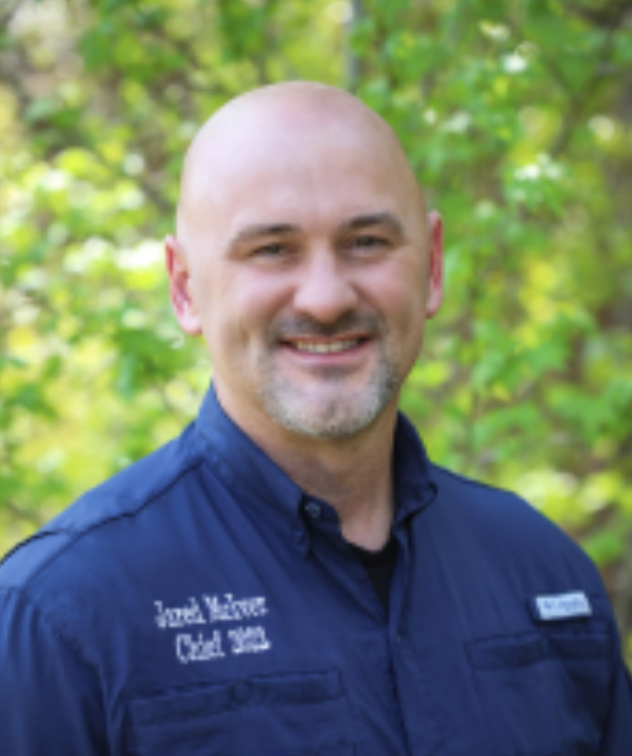
The taskforce, made up of the Minden Police Department and the Sheriff’s Offices of Webster, Bienville, and Claiborne Parishes, aims to address crimes that cross parish lines by increasing communication and intelligence sharing between agencies.
McIver said many crimes in the region appear to be gang-related, despite efforts by the Minden Police Department to reduce gang presence within the city.

“There are still whispers of gangs around here, but they’re happening in our neighboring parishes now,” McIver said. Through conversations with sheriffs in nearby parishes, he added, they determined that several individuals involved in criminal activity are known in multiple jurisdictions. “With sharing that intelligence, we’ll be able to solve crimes faster.”
The chief noted that law enforcement agencies often operate independently, without daily communication or a standardized system for sharing information on lower-level offenses and persons-of-interest.
“Not all law enforcement agencies collaborate or talk on a daily basis; it just doesn’t happen,” he said.
Regular meetings between agencies, both in-person and via Zoom, are being established to help bridge that gap. These sessions allow officers to identify patterns and individuals active across parish boundaries.
McIver is also planning to install license plate readers (LPRs) at each of Minden’s nine exits. The devices will not be used for issuing traffic citations but will serve as tools to track vehicles potentially linked to crimes.
“It will help us be able to time stamp when a wanted vehicle comes through Minden,” he said.
Although the taskforce will address gang-related offenses, its scope includes all violent crimes and coordinated efforts to reduce overall crime rates.
“Us continuously sharing information, evidence, persons-of-interest — all that will come together and, I think, drive our crime rates further down,” McIver said.
He emphasized the role of deterrence in public safety. “Criminals are not going to commit a crime where they think they’re going to get caught. They’re going to try to go somewhere where they think they can’t get caught,” he said.
McIver noted that while major felonies like murder or kidnapping are entered into the National Crime Information Computer (NCIC) and shared nationwide, minor offenses and property crimes are not. Without a centralized system, agencies must reach out individually to others when seeking information on these cases.
“It’s a case-by-case basis,” he said.
Since McIver took office, the frequency of violent crime has declined. “When we came in [to office], there were shots fired almost every night, there were shootings, drive-bys, there was gang activity everywhere. We have done a lot to suppress just about all of that,” he said. “Have we eradicated it? No. Will we? Probably not, but we have put a huge dent in it. I believe the people of this city have felt that and see that. We’re going to continue staying on it; you can’t let off that sort of activity, or it just comes back.”
The newly formed taskforce will hold regular meetings to coordinate crime-fighting efforts across jurisdictions. “We all have the same goal, and that goal is to eradicate violent crime,” McIver said.