


If you grew up back before the war like I did, life was far less complicated. We didn’t realize it was less complicated; it was the life we were born into before complicating things emerged onto the scene.
Summers, especially, were special for country boys like me. Once school was done for the year at the end of May, we had the whole summer to ourselves. There were assigned tasks we had to do before enjoying the fruits of summer, things like my brother Tom and me helping mama and daddy pick purple hulls, sitting barefoot on the porch with a pan in my lap shelling peas until my fingers took on a purple hue. Not bad at all for at least I didn’t have to get ready to go to school for a few months.
Sometimes before finishing with the pea shelling, cousinDoug who lived with his brother Sambo on the next hill would come walking up. “Let’s go set out hooks,” he’d say and that was all it took for us to finish our pan of peas in a hurry because setting out hooks was one of the activities that gave the lazy days of summer extra life.

In case you weren’t raised during the same era as me, you might be confused as to what “setting out hooks” means. Half a mile below our house was a stream that coursed among the oaks and hickories through the woods, a stream that had such special meaning for the Harris boys. Molido creek was a clear running stream that bent and twisted a serpentine path along the way.
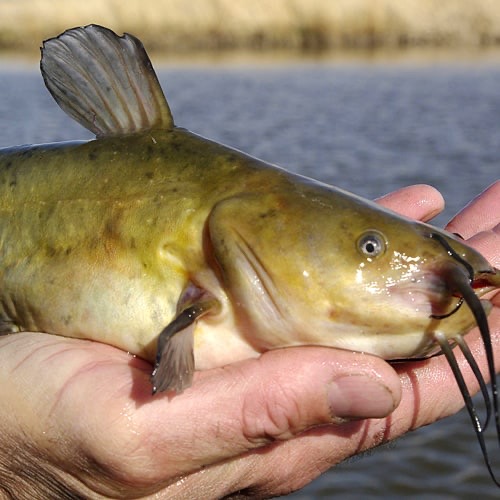
In several of the bends in the creek, the water was deep enough for us to dive off the sandy bank and swim but these quiet little holes held a species of fish that drew us back time and again during summer. The book calls them “bullheads”, but to us, they were “mud cats”.
On a typical “setting out hooks” venture, we’d leave home with hatchet, a spool of black fishing line and a Prince Albert tin of hooks and sinkers. First stop was the cow barn where flat dried cow patties were hideouts for red wiggler worms. Flipping over a few until we had enough worms, we’d barefoot it through the woods for Molido.
Once we got to the creek, first task was finding enough long slender saplings to serve as fishing poles that were chopped down. Next, fishing line about the length of the pole was tied on with hook and sinker added. Next came a glob of juicy red wigglers and we were ready to do business.
The poles were secured to the overhanging bank of the creek by jabbing a hole deep enough to hold the butt of the pole. Lobbing the baited hook into the water, we had completed the “setting out hooks” cycle.
Periodically, we’d come back by to see if the pole was gyrating indicating that a catfish had taken the bait. If it was, the fight was on and the next task was to wrestle the fish onto the bank. After a day of fishing, we would often find a bucket full of mud cats.
I love to eat catfish, especially filets of channel or flathead catfish what when fried up, are hard to beat. There was one problem with having caught a bucket of mud cats; they live up to their name “mud cats”. We tried to clean some and have our mom fry them up but they tended to taste like mud.
JWe soon learned that after a day of setting out hooks and catching a bucket of mud cats, best thing was to put them back in the creek so next time Doug suggested we go “set out hooks”, they’d be there for us to do it all over again.