


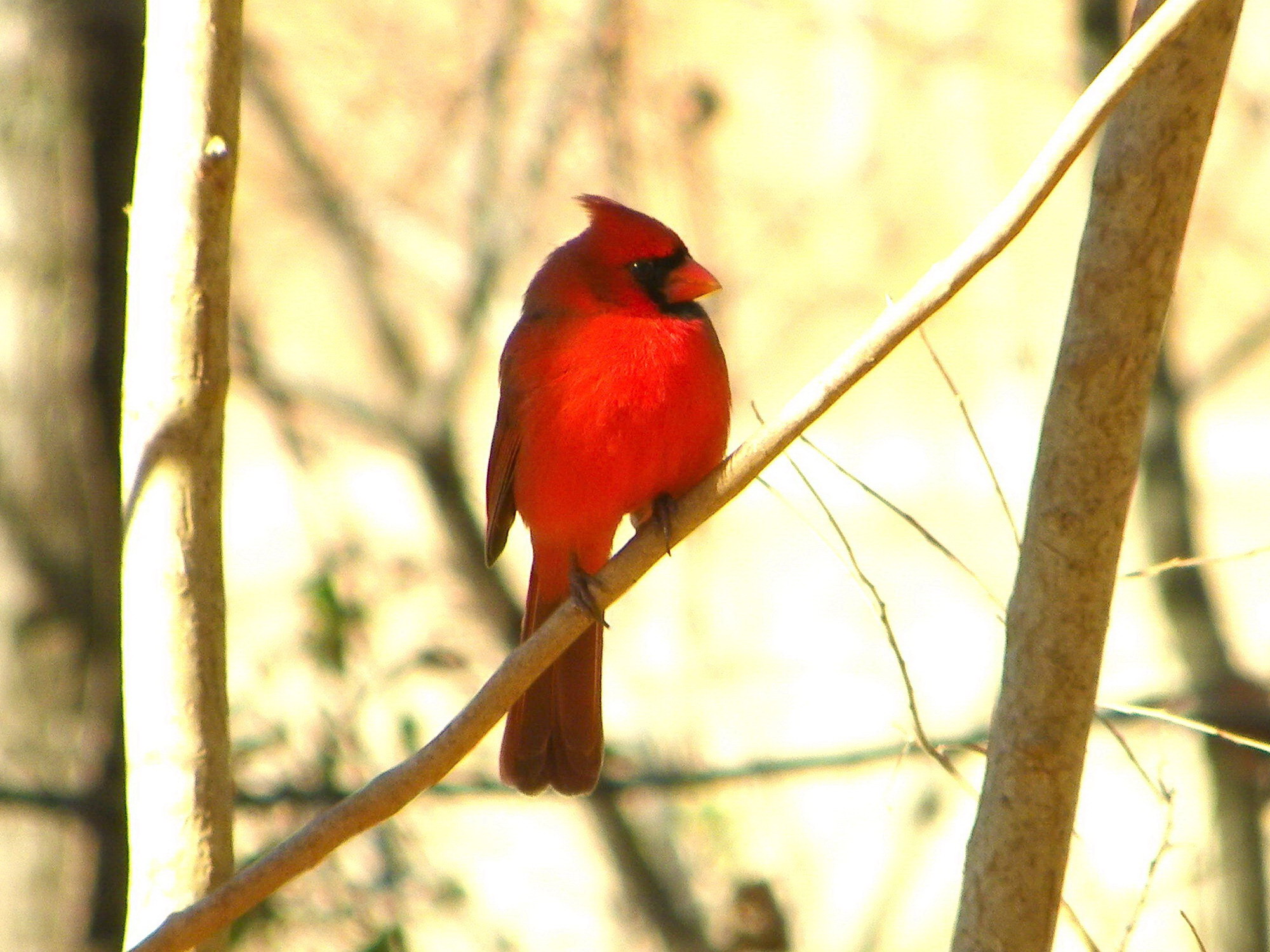
Featured photo: The most frequent visitor to many bird feeders is the beautiful Northern Cardinal. (Glynn Harris)
If you have followed my writing and broadcasting down through the years, you know there is one topic that stands above the rest. Song birds; I am intrigued by those little feathered creatures, many of which make their homes in the thickets surrounding my yard.
In addition, we keep our bird feeder filled with nuggets birds seem to love, the principal one being black oil sunflower seeds. Smaller ground feeding birds are more interested in smaller seeds such as safflower and millet. Suet is particularly attractive to wood peckers and some larger varieties of birds.

Talking about ground feeding birds, it is difficult to discern the difference in many. Most are little brown birds – some folks call them all “tweety” birds. There are two species with which I can readily identify – chipping sparrows and white throated sparrows. Some of the others such as song sparrows and field sparrows are not on my radar.
There is one sparrow-sized species though I see only in winter and I can identify him with no trouble, the Junco, or as we always called them, “snow birds”, black on the back and white underneath.
There’s a myth about northern Cardinals. I read frequently that when you see a cardinal, this means someone in Heaven is thinking about you. If that is the case, I’m keeping somebody “up there” busy because cardinals are probably the most frequent visitor to our feeders.
Even if they’re there all the time, we can’t help but enjoy the brilliant red of the male and the muted colors of the female.It’s their song that really attracts. According to my “Birds of North America” book, the song is “distinctive, a loud, liquid whistle with many variations”.
We always get a little excited when a new bird shows up. This year, we have a pair of redheaded woodpeckers hanging out around our yard and feeder. The striking colors can really capture your attention. With a solid red head and throat contrasted with black and white underparts, it’s a flash of contrasting color as it flies across the yard to the feeder or nearby tree.
Another woodpecker that visits frequently is the “red bellied woodpecker”. This ladder-back bird was named wrong, I think, because you have to use your imagination to see any red on the belly. His staccato call is loud while the red headed woodpecker, who has a similar call, is softer and more muted. We feel fortunate to have both these varieties in our yard.
I have written about the following in the past, and that’s our encounter with the breathtakingly beautiful painted bunting. For ten years straight, we had this handsome beauty show up on our feeder. He would come in the middle of April every year.
Our neighbor cleared land adjoining our property and after that, we never saw this beauty again. We miss him a lot.
In winter on those rare occasions when we have snow on the ground, there are two varieties that show up, birds we never see unless it snows.
The strikingly beautiful Eastern Towhee is one, a bird with black head and back and chestnut sides. This secretive bird feeds completely on the ground and it’s always exciting to see one.The other is a fox sparrow, a large sparrow with speckled underparts and a dot in the middle of its breast.
Call me a bird brain if you wish but that’s okay. I just happen to enjoy hanging around these pretty little sprites and sharing my interest with my readers.