


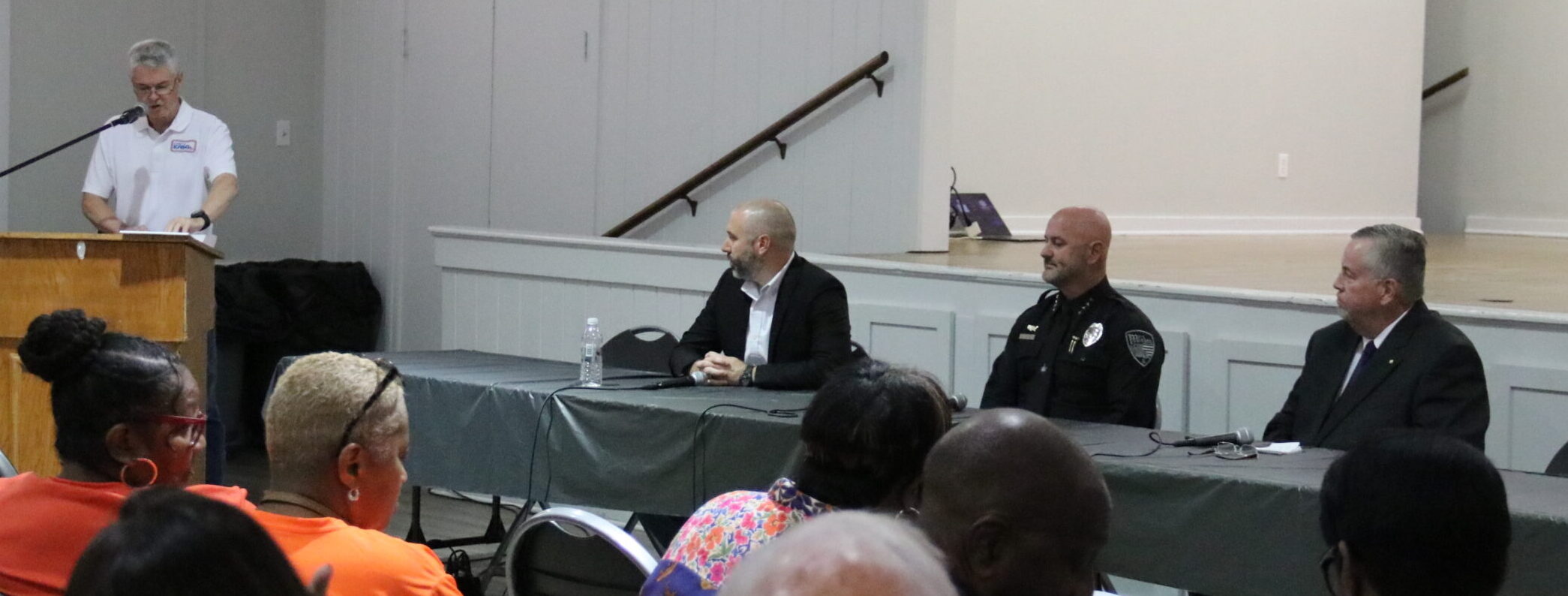
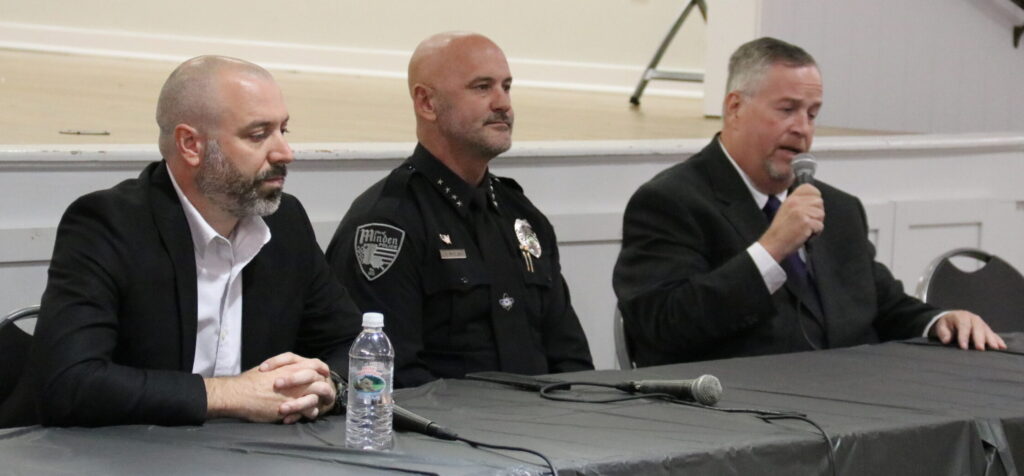
The three candidates seeking to lead the Minden Police Department offered differing assessments of the department’s current operations during the October 12 KASO/KBEF Candidate Forum, with discussions focusing on officer morale, neighborhood patrols, accountability, and public trust.
Incumbent Chief Jared McIver defended the progress made during his administration, while challengers Ryan Barnette and Tim Morris called for changes in departmental leadership and increased police visibility throughout Minden.
Although the candidates disagreed about the department’s current performance, all three emphasized the importance of community relationships, officer training, and keeping residents safe.

Staffing, morale, and accountability
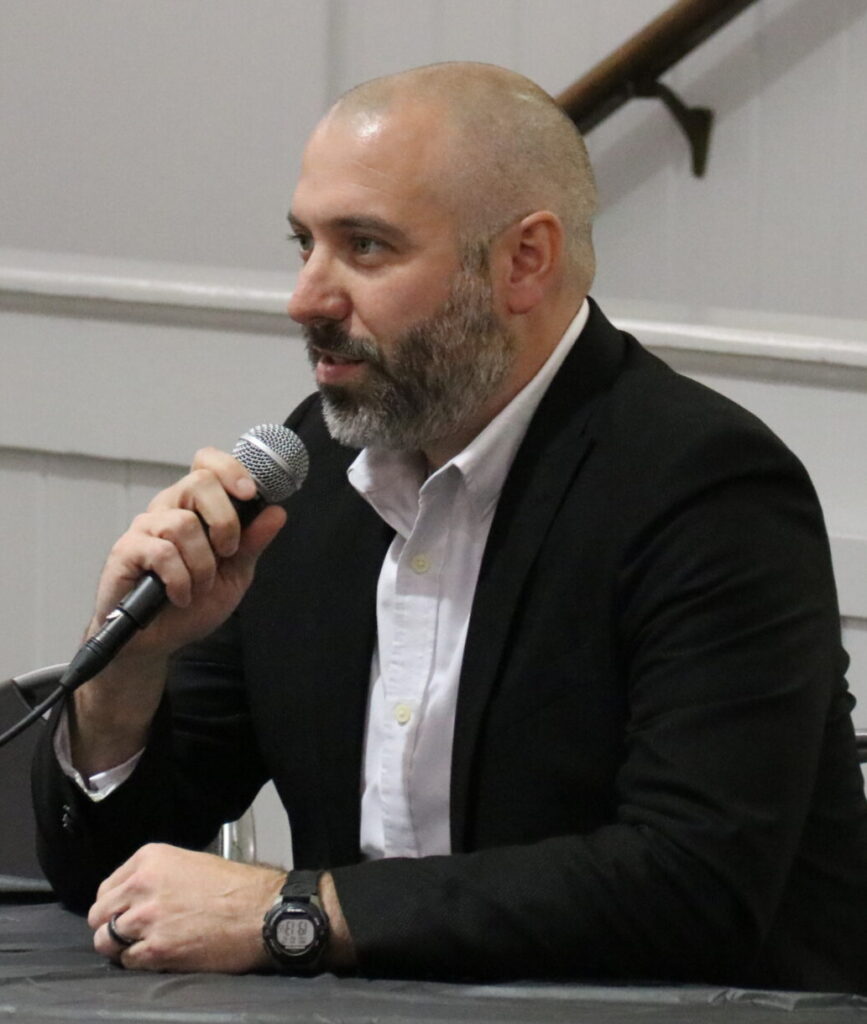
Barnette identified improving officer morale as his first priority, arguing that a positive working environment would help recruit new officers and retain experienced personnel.
“There should be no better advocates for the Minden Police Department than the men and women who work there,” Barnette said.
He also proposed conducting a comprehensive review of departmental policies and procedures within his first 90 days in office and making those policies available to the public.
Barnette said he would emphasize uniformity in officers’ appearance and conduct, arguing that professionalism begins with how officers present themselves.
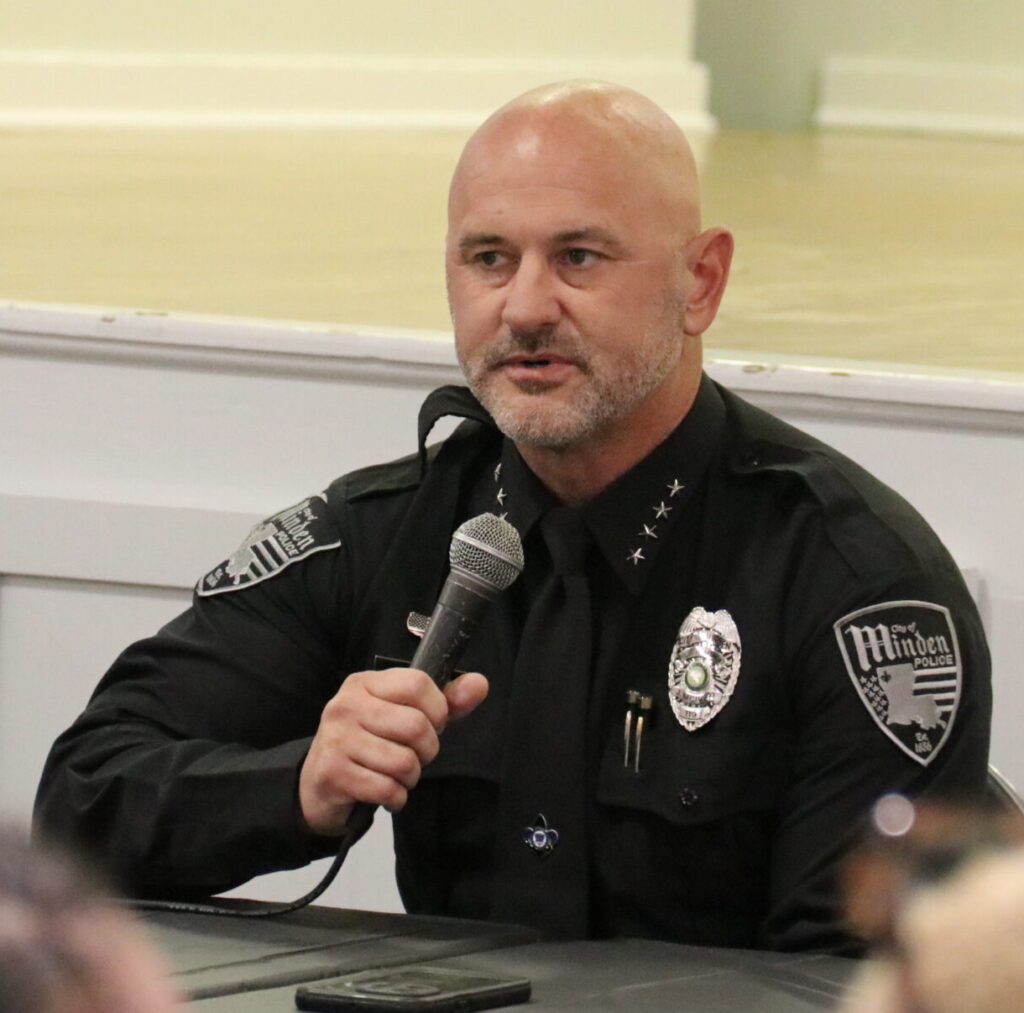
Morris, who retired from the department in 2023 after a career beginning in 1995, also expressed concerns about officer retention. He said conversations with officers had led him to believe that some were leaving because of dissatisfaction within the department.
“We have a revolving door. We’re training them to go somewhere else,” Morris said.
He proposed establishing clear conduct standards and daily expectations for officers and supervisors, along with increased accountability and transparency.
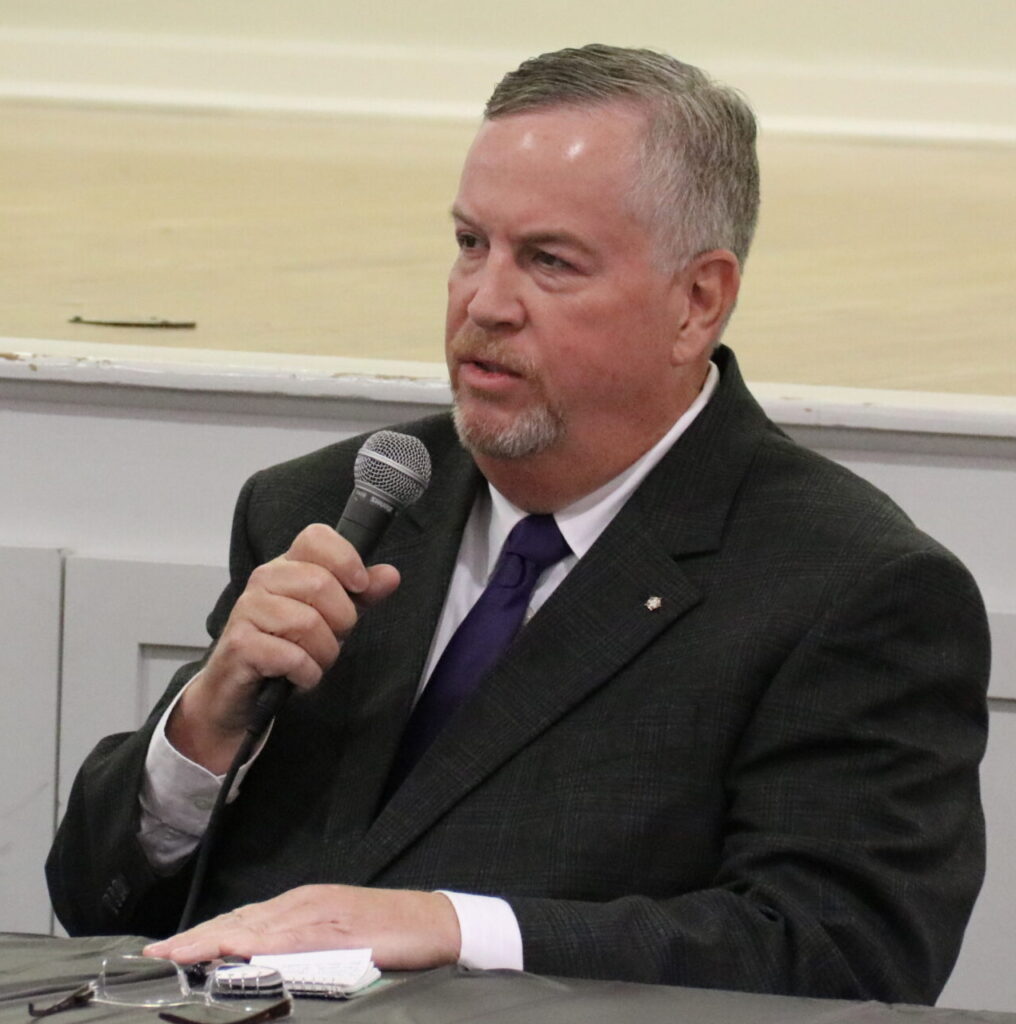
McIver disputed the characterization of the department as struggling with morale or retention, saying the MPD has maintained a nearly full complement of officers despite staffing challenges faced by law enforcement agencies elsewhere.
“Folks, we’ve got good morale there,” McIver said. “These officers can leave, go down the road at any time, and go to work for somebody else. But they choose to stay here.”
He pointed to expanded training opportunities, improved equipment, and take-home patrol vehicles as measures that have helped retain personnel.
McIver also defended his administration’s accountability efforts, saying some officers had been terminated or resigned to avoid termination. He maintained that holding employees accountable has been an important part of rebuilding public confidence.
Barnette challenged the suggestion that accountability was lacking before McIver took office, citing his experience working under former Chief Steve Cropper.
“We absolutely had accountability when Chief Steve Cropper was chief,” Barnette said during his closing remarks.
The candidates’ competing descriptions of officer morale, staffing, and departmental accountability were presented during the forum without accompanying personnel statistics.
Neighborhood patrols and speeding
The need for visible police patrols emerged repeatedly throughout the discussion, particularly when candidates were asked how they would address complaints about speeding on residential streets.
Morris said restoring routine neighborhood patrols would be central to his administration.
“It goes back to my main reason for running: getting officers back into our neighborhoods,” he said.
He argued that officers who regularly patrol residential streets can identify speeding, drug activity, and other problems before residents have to report them.
Barnette agreed that neighborhood visibility should receive greater attention. He described observing reckless driving while campaigning door to door and said officers should become familiar with the people living in the areas they patrol.
“People in our residential neighborhoods need to know their police officers by name and vice versa,” Barnette said.
McIver responded that neighborhood traffic enforcement is already part of the department’s daily operations.
He explained that supervisors assign officers to areas where speeding complaints have been received and that patrol officers also monitor school zones during morning and afternoon traffic.
“When we get complaints of speeding on streets, officers go to those streets,” McIver said.
He added that most patrol vehicles now have radar equipment, compared with relatively few when he took office.
McIver acknowledged that speeding can resume after officers leave an area, saying the department’s goal is to deter violations as much as possible while responding to other calls for service.
STEP program draws discussion
The Minden Police Department’s STEP traffic enforcement program, which places off-duty officers along Interstate 20, prompted considerable discussion about the balance between highway enforcement and neighborhood patrols.
All three candidates expressed support for continuing the program, although Barnette and Morris questioned whether more could be done to increase police visibility within the city.
McIver explained that STEP is staffed by officers working during their off-duty hours and does not remove officers from regular patrol assignments.
“So we don’t pull guys off of our normal patrol to work there,” McIver said. “That’s strictly off-duty time.”
He said the program was established before his administration and helps reduce crashes and fatalities along the interstate. Major interstate accidents can also require on-duty city officers to direct traffic when vehicles are diverted through Minden, he explained.
Morris agreed that the program has helped reduce crashes and acknowledged that participating officers are off duty. However, he said he understands why residents might question seeing officers working the interstate when they believe their neighborhoods need more patrols.
Barnette also supported preserving the program and the additional income it provides officers, but suggested examining how the revenue it generates is distributed.
“If we can find a way to put police officers on the interstate, we can find a way to increase their presence in our residential neighborhoods,” Barnette said.
He argued that speeding on residential streets poses a particular danger to families and called for directing more resources toward neighborhood enforcement.
Technology and privacy
The candidates were also questioned about safeguards surrounding cameras and automated license plate readers, including data access, retention, and public accountability.
Barnette acknowledged the value of license plate readers in criminal investigations but said access to information collected by the systems should be tightly restricted.
He expressed concern about who may be authorized to access data and suggested that residents who oppose the technology should address those concerns with local and state officials.
Morris likewise recognized the technology’s usefulness in solving crimes but questioned its preventive value. He advocated clear restrictions on access, with oversight from the City Council and departmental policies.
McIver clarified that Minden uses license plate readers supplied by a company he identified as AIC rather than Flock Safety.
He said the system reads license plates and records timestamps to assist investigators, including in cases involving stolen vehicles.
“These cameras have already been used to solve several crimes and a stolen vehicle here in Minden,” McIver said.
He maintained that officers are prohibited from using the system for unauthorized searches and that the department does not use facial recognition or technology that looks inside vehicles.
The candidates’ descriptions of the technology and its safeguards were not independently verified during the forum.
Combating drugs and building partnerships
When asked about illegal drug activity, Morris again emphasized the importance of officers regularly patrolling neighborhoods, saying that increased visibility would help identify suspicious activity and other public safety concerns.
Barnette described patrol officers as the eyes and ears of investigators and narcotics agents. He said he would support strengthening narcotics enforcement but argued that doing so requires adequate staffing on patrol shifts.
He recalled working shifts with five or six officers under previous administrations and questioned whether enough personnel are currently assigned to patrol duties.
McIver defended the department’s drug enforcement efforts, saying officers continue to make arrests and remove illegal firearms from the streets.
He reported that the department has recovered more than 100 illegal firearms from Minden streets over the past three years.
“We have made an impact on narcotics,” McIver said, while acknowledging that eliminating illegal drug activity entirely is unlikely.
He also emphasized the role residents play in identifying suspicious activity and providing information to investigators.
All three candidates supported maintaining strong relationships with neighboring law enforcement agencies.
Barnette cited professional connections developed during his law enforcement career and his current work in bank security and fraud investigations.
Morris recalled coordinating with the Webster Parish Sheriff’s Office and Louisiana State Police during his years with the department.
McIver pointed to his nearly 30 years in law enforcement and said he regularly communicates with Sheriff Jason Parker and other agency leaders across the state to exchange information.
Public image and community trust
The candidates offered different perspectives on how the department’s public image affects residents’ confidence.
McIver highlighted changes to patrol vehicles, uniforms, and equipment under his administration. He said officers helped design the department’s patches and vehicle graphics, giving them a greater sense of ownership and pride.
Barnette questioned whether uniform standards are being consistently followed. He described seeing seven on-duty officers enter a restaurant wearing different clothing, with only one dressed in what he considered a police uniform.
“Look sharp, act sharp, be sharp,” Barnette said, quoting a familiar law enforcement saying.
Morris argued that the department’s reputation depends on more than appearances, referencing negative publicity surrounding lawsuits involving the department.
The candidates also discussed how to encourage residents who may be reluctant to report crimes or communicate with officers.
McIver said his administration has worked to strengthen relationships with pastors, community leaders, and residents by attending public events and listening to concerns.
“That’s one of the biggest things about trust. Not just getting out and speaking, but listening,” he said.
Barnette proposed establishing a Citizens Police Academy to help residents understand police procedures, criminal law, and investigative practices.
He said providing residents with a better understanding of law enforcement could help bridge gaps between officers and the communities they serve.
Morris emphasized treating residents with respect and recalled being nominated by a Minden citizen for recognition of his service during his law enforcement career.
Different visions for the department
Asked why they were seeking the position, the candidates returned to their individual motivations.
Morris said he had been enjoying retirement but decided to run after hearing concerns about conditions within the department. He said he wants to restore officers’ confidence in leadership and establish clear expectations.
Barnette said his decision was rooted in wanting his children and future grandchildren to grow up in a safe community. He also emphasized creating a department where officers want to remain throughout their careers.
McIver said helping people remains the most rewarding part of serving as chief, particularly assisting victims of domestic violence and sexual assault, families experiencing crises, and residents who need help finding resources.
“I’m running because I enjoy the job and the position,” McIver said. “I don’t let the position make me. I do my best to make the position better every day.”
In closing, McIver acknowledged that the department is not perfect but maintained that it continues to improve through training, equipment upgrades, and partnerships with other agencies.
Barnette called for a different direction, emphasizing fairness, transparency, and equal accountability.
Morris said he hopes to bring the trust he earned as a longtime police officer to the chief’s office.
The three candidates will face voters in the November 3 election.