



When someone calls 911, the focus is usually on getting police officers, firefighters, or emergency medical personnel to the scene as quickly as possible. But much of the work that makes those responses possible happens before the first emergency vehicle arrives.
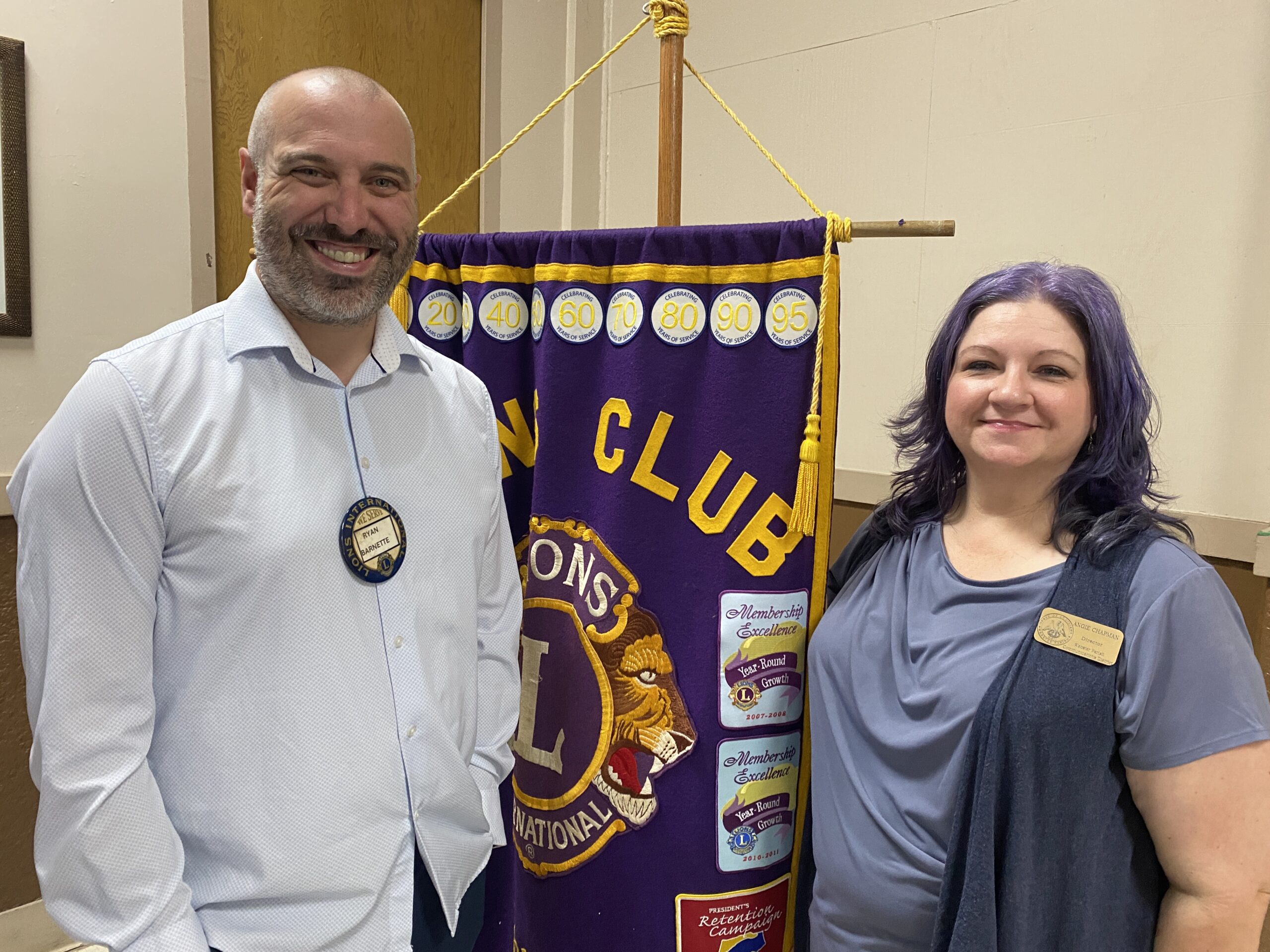
Angie Chapman, director of Webster Parish 911, gave members of the Minden Lions Club a behind-the-scenes look at emergency dispatch operations during their October 22 meeting, explaining how calls are handled, how technology helps locate callers, and what residents can do to help emergency personnel respond more efficiently.
Chapman has worked in emergency dispatch for 23 years, including the past eight with Webster Parish 911.

She began her presentation by discussing the images people typically associate with 911 — firefighters battling flames, police officers responding to incidents, and paramedics treating patients.
“What happens before then is my job, so in those seconds that it takes to call 911, there’s a lot that happens behind the scenes for us.”
One of the most important pieces of information dispatchers need is the caller’s location. While calls from landlines generally provide an immediate location, cell phones present additional challenges, particularly when callers are moving.
“We need to know where you are, but sometimes people don’t know where they are. The good news is that we have technology that helps with that.”
Chapman explained that callers may be unfamiliar with their surroundings, unable to communicate clearly, or too frightened to remember basic information. Children, visitors, people with speech difficulties, and those who do not speak English can present additional challenges.
“We can send the cavalry to you if we need to, but we need to know where to send them first.”
Dispatchers also ask for a callback number in case the call is disconnected, followed by questions about what is happening at that moment. Chapman said callers should not be surprised if dispatchers interrupt lengthy explanations to obtain the most critical information first.
The sooner dispatchers understand the situation, the sooner they can determine whether police, firefighters, emergency medical services, or some combination of responders is needed.
She emphasized that answering questions does not mean help is being delayed. Information is entered into a dispatch system and relayed to responders while the conversation continues.
Webster Parish 911 operates from the Webster Parish Courthouse, where its telecommunications personnel answer emergency calls and determine the appropriate response. Calls requiring medical or law enforcement assistance are transferred to dispatchers trained in those specialties, while Webster Parish 911 handles fire dispatching directly.
“Now, if your barn is on fire, you’ll be talking to us for a while.”
In those situations, dispatchers may ask what is burning, how large the fire is, whether nearby structures are threatened, and whether people or animals are inside.
“But that does not delay the response,” Chapman said.
“While you’re talking to one of us, the other is dispatching that information to the fire department.”
“And I am very proud to say that we can do that in about 30 seconds.”
Chapman has also reported to the Webster Parish Police Jury that the agency routinely answers emergency calls within 10 seconds.
Another challenge involves callers reporting emergencies from somewhere other than the actual scene. Chapman gave the example of a teenager involved in a wreck in Shreveport who calls a parent in Webster Parish. If the parent then calls 911, dispatchers must determine where the emergency actually occurred and connect the caller with the appropriate agency.
She encouraged residents to call from the scene whenever it is safe, allowing cell phone location technology to provide more accurate information.
“If it’s safe to do so, call us from the scene.”
Chapman also recommended keeping location services enabled on cell phones. She explained that Webster Parish 911 has specialized location technology not available directly through the sheriff’s office or municipal police departments, making it important for residents to call 911 rather than a law enforcement office during an emergency.
Even with that technology, she cautioned, cell phone location information may not pinpoint an exact location, and dispatchers cannot provide an exact arrival time for responders.
The agency also uses the RAVE Panic Button system, which allows teachers and school personnel to report emergencies on campus.
Chapman stressed that callers should remain on the line until instructed to hang up. Dispatchers are required to attempt to call back when a call is disconnected, including accidental calls. Anyone who accidentally dials 911 should simply explain the mistake rather than hanging up, which could otherwise result in officers being sent to check on the caller.
Questions from Lions Club members also addressed emergencies occurring near parish boundaries, including situations on Lake Bistineau, where callers may not know which parish has jurisdiction.
“I don’t care which parish you’re in. We’re going to send everything we’ve got until we know better.”
Chapman explained that Webster Parish 911 is funded primarily through surcharges on telephone bills, along with contributions from the fire department. Its staff consists of 12 employees, including administrators.
Throughout the presentation, Chapman emphasized the importance of cooperation between callers and dispatchers. Knowing one’s location, clearly describing the emergency, answering questions, following instructions, and reporting changes in the situation can all help emergency personnel respond effectively.
She reminded members that calling 911 activates an entire coordinated emergency response system, even when the caller hears only one person’s voice.
The Minden Lions Club, guided by its motto, “We Serve,” meets every Thursday at noon at the American Legion Memorial Hall, located at 119 Pine Street. The club regularly hosts guest speakers and welcomes new members interested in serving the Minden community.