


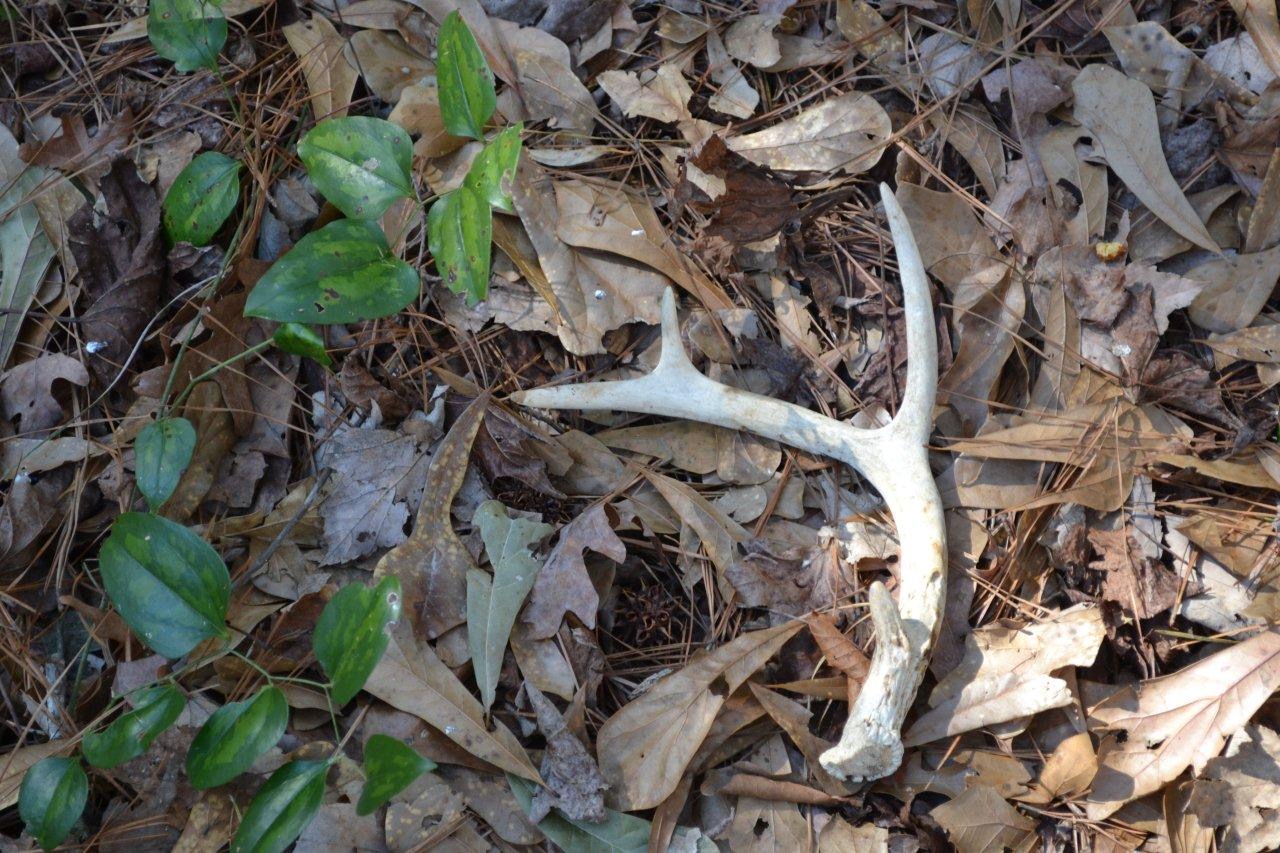
Featured photo by Glynn Harris: Buck deer shed their antlers, which are actually dead bone, this time of year.
There is a remarkable act of nature starting to take place any day now. A few years ago, I was turkey hunting when I saw something that fascinated me. As I sat overlooking a food plot, a deer stepped out 40 yards or so away followed by a second and then a third deer. They lingered just long enough for me to get a good look at them but no time to snap a photo.
The interesting thing I noticed about these three deer, something I’d never seen before, was that all three were bucks that had only recently shed their antlers. Each of the three had prominent circles – pedicles – on their heads where last year’s antlers had grown.

Somewhere back in the woods, there would have been a prize to find; the dropped antlers from these three.
When we’re out there deer hunting and a buck stepsout, our only interest in antlers is the size of the rack.
Is it a trophy or one with a smaller rack that indicates it’s a young deer? If a small rack, most of us let the youngster walk, realizing that next year, that little basket-racked six point buck may have grown an impressive set of head gear.
Here’s what happens in the world of the deer. Buck deer drop their antlers in late winter or early spring. Soon after losing their headgear, they start growing a new set of antlers they’ll have until this time next year. This new set begins as fuzzy knobs growing on the pedicles which are located on the buck’s head between his eyes and ears. The newly formed antlers are soft and subject to damage and for this reason, bucks are shy and reclusive; they’re protective of this new growth.
A couple of months before shedding antlers, bucks use them to hook and thrash bushes, brush and small saplings and to fight other bucks to establish dominance. Bushes and bucks are in no danger of being gored and thrashed in spring and summer because he is protecting his newly forming soft antlers.
According to a source I read about the growth of deer antlers, velvet is described as “vascular skin that supplies oxygen and nutrients to the growing bone.” This amazing material causes the antler it covers to grow at an amazing rate. In fact, deer antlers grow faster than any other mammal bone. This fast rate of growth actually is a handicap to a buck because of the incredible nutritional demand on deer to re-grow antlers annually.
Once the antlers achieve their full potential for the year, usually by mid-September in our part of the world, the velvet has served its purpose and as it dries and is rubbed off on bushes by the buck, the antler bone actually dies and here’s something I read that gave me pause. What deer hunters see when that big buck comes slipping by the stand is an animal sporting a head full of dead bone.
A fun activity many deer hunters like to pursue now that hunting seasons are over is to search for dropped antlers. There is a measure of excitement to hold in your hands the head gear of a big buck that will whet your appetite for what he’ll look like once hunting seasons roll around again this coming fall.
The entire process of bucks growing velvet covered delicate antlers to them becoming hardened and eventually being shed just to do it all again every year is one of nature’s most amazing and fascinating activities.