


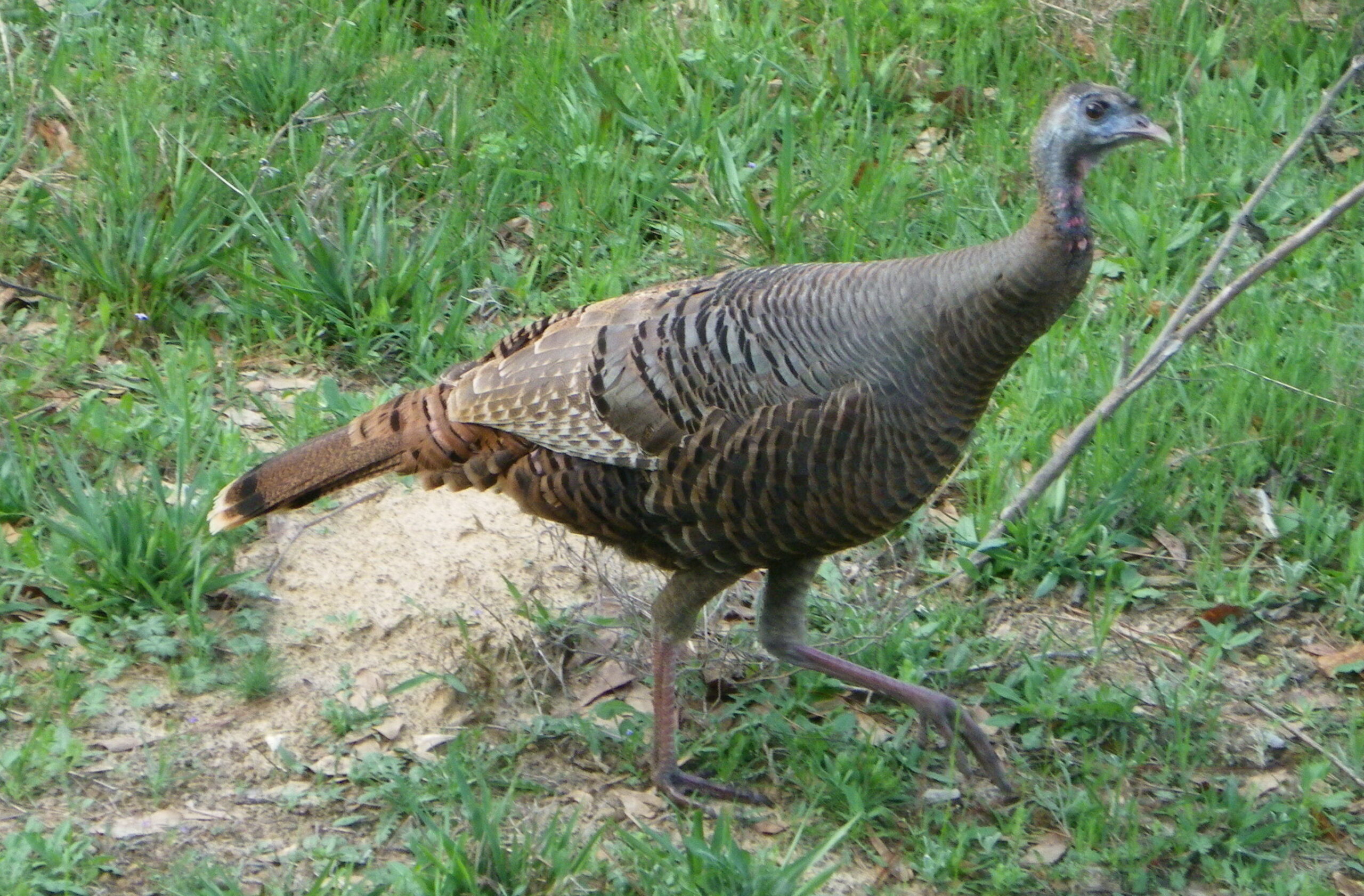
Featured photo by Glynn Harris: Sometimes a decoy can attract turkey hens that will be followed by a gobbler.
Turkey hunting in Louisiana is going full tilt with another week to go until season ends May 3. From posts I’m seeing on the Internet and from calls I’ve gotten, it seems to have been a pretty good season so far with quite a few longbeard gobblers biting the dust since season opened for the general public April 3.
I’m guessing that many of the successful hunters attracted their gobblers by the use of decoys. From personal experience, I have found that in most cases, a decoy helped in bringing the old boy in within shotgun range.

Most hunters who use decoys rely on a fake hen to draw the attention of gobblers. Personally, I used foam hen decoys because of the ease in folding them up and putting them in your hunting vest. Sometimes, however, a hen decoy accompanied by a juvenile (jake) gobbler has been the ticket for attracting gobblers.
Several years ago, I had the privilege of being a guide on a youth hunt on what was then the Jackson Bienville Wildlife Management Area. The hunter I was hosting was a young per-teen lady, Sarah Hebert, daughter of now retired wildlife biologist, Steve Hebert.
We arrived at the designated spot before daylight, Sarah, a photographer and I. Out front of the blind prepared for us a hen and jake decoy were staked down.
As dawn, turned to daylight, I mimicked the hoot of a barred owl to attract attention and got an immediate lusty gobble in response. Settling back, I used my slate call to sound like a hen turkey, hoping the gobbler’s interest would be triggered. The gobbler thundered his response and within minutes, he came running toward the decoys, hoping to chase the jake away and have the hen to himself. Sarah was right on target and downed her very first gobbler. This time, for sure, the decoys helped bring the gobbler in.
On another occasion, I was set up on a pipeline with a hen decoy out. I had a gobbler responding to my call and within minutes, I watched him step out onto the pipeline, but then he stopped. Something about seeing the fake hen, caused him concern and although he stood and gobbled at her for 10 minutes, he turned and walked away, apparently expecting the stationary hen to at least meet him halfway.
My friend, retired biologist Luke Lewis and a long-time turkey hunter introduced me to turkey hunting.
“I’ve been fortunate to take a hundred or so gobblers and I’d say 75 to 80 of them I got when using a decoy,” said Lewis.
“A gobbler has a radar in his head. You can call to him from half a mile away and if he’s interested, he can home in onyour location and knows exactly where the call is coming from. If he gets close enough to you, he’ll stop to gobble and strut, expecting the hen to come to him.
“If he doesn’t see a hen, he’ll probably lose interest and walk off. On the other hand, if he sees a decoy, he will often strut on into shotgun range,” he added.
Hunters today will sometimes sweeten the pot by putting out a flock of fake hens accompanied by a pretend jake. When a mature gobbler responds to your call, he will sometimes respond and strut on in to fight the jake, hoping to have the hen haram to himself. Other times, a young gobbler will be intimidated by the flock and not have the nerve to prove he’s the man for the job.
Use decoys or leave them in the truck; the choice is yours but more than likely, you’ll find a fake hen is usually better than no hen at all.